Transcript
ReachMD Announcer:
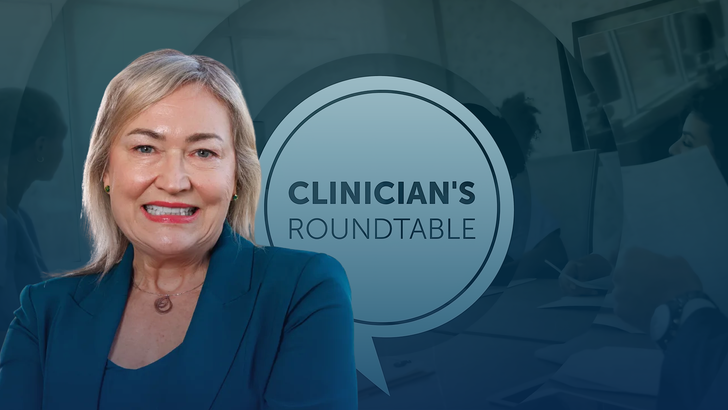
You’re listening to Clinician’s Roundtable on ReachMD. On this episode, we’ll hear from Dr. Darilyn Moyer, who’s the Executive Vice President and Chief Executive Officer of the American College of Physicians. She’ll be discussing our approach to evolving evidence during the COVID-19 pandemic. Here’s Dr. Moyer now.
Dr. Moyer:
When I reflect on the phrase “flying the plane while building it,” I think it really encapsulates what happens when the scientific process has to be applied to a rapidly evolving phenomenon, which is exactly what we saw during COVID-19. Science is an iterative process; it's not written in stone. We constantly test new hypotheses. We have lots of new information coming at us all the time. A dean from a medical school once famously said to a graduating class, “Congratulations to our new physicians. 50 percent of what you learned in medical school will soon be proven outdated. The problem is, we don't know which 50 percent.” So, we know that science is an iterative process. Now, we layered onto that a pandemic of one of the most rapidly mutating viruses known to humankind, and so now, we're off, and we're trying to keep up with this. We literally were doing the absolute best we could with it.
I think we know we could have certainly done better in laying the foundation in terms of our messaging for the public. And what I would say about that is, we should have prepared the public, and science is messy to begin with, but once it enters the public domain, and now with the emotional contagion that happens in media to begin with, let alone social media, we see that we could have done better. We should have, at the beginning of every single one of our-public facing statements, put a qualifier in: “Here's what we know right now. It is possible that our guidance is going to change based on new information that we may receive in a minute from now, an hour from now, a day from now, or a week from now.”
That does not mean we are being wishy-washy. It means that we are following the information as it evolves, and we are doing the absolute best we can with the information we have at our fingertips right now and making the best decisions we possibly can. The Retrospectoscope is always 20/20. We should be saying, “Where could we have done better? And what do we need to do now moving forward?” Because it's not a matter of if, but it is a matter of when we are going to be facing another pandemic such as this.
ReachMD Announcer:
That was Dr. Darilyn Moyer sharing insights on evidence-based guidance during the COVID-19 pandemic. To access this and other episodes in our series, visit Clinician’s Roundtable on ReachMD.com, where you can Be Part of the Knowledge. Thanks for listening!